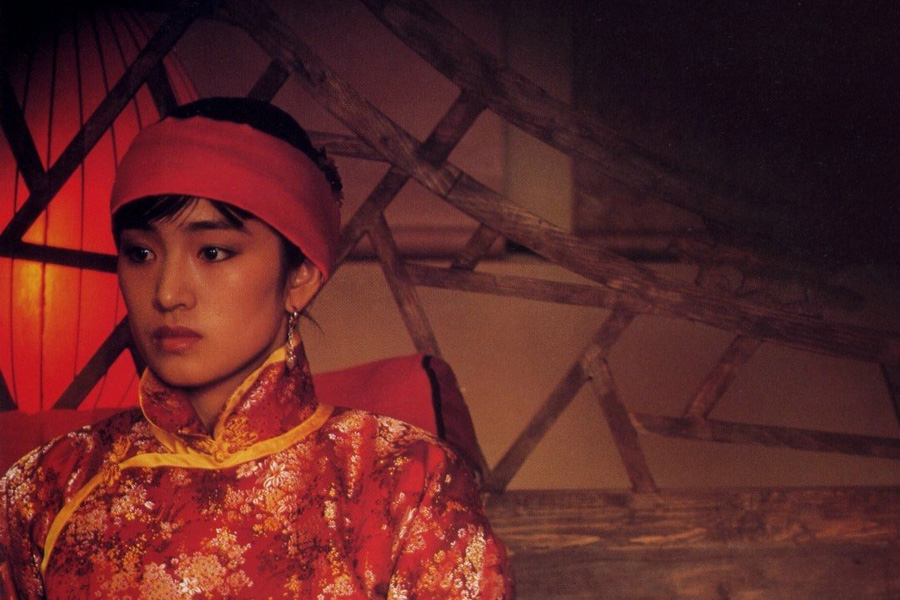
Red Sorghum (Film)
Introduction
Red Sorghum, directed by the acclaimed Chinese filmmaker Zhang Yimou, marks a significant milestone in the history of Chinese cinema. Released in 1987, this film is an adaptation of the novels Red Sorghum and Sorghum Wine (two parts of the collective work Red Sorghum Clan) by author Mo Yan, who won the Nobel Prize in Literature in 2012. It tells a poignant story set against the backdrop of rural China in the 1930s and 1940s, capturing the spirit and resilience of its characters amidst adversity. The film was Zhang Yimou's directorial debut and quickly gained international acclaim, most notably winning the prestigious Golden Bear for Best Picture at the 38th Berlin International Film Festival in 1988.
Plot
The narrative of Red Sorghum centers around a young woman, Jiu'er, portrayed by Gong Li, who is married off to a leprous winery owner. Set in the arid landscapes of Shandong province, the story unfolds as Jiu'er inherits the winery after her husband's death. The film explores themes of love, survival, and resistance as Jiu'er and her community confront the challenges of life and the War of Resistance Against Japanese Aggression. The red sorghum fields, a central motif in the film, symbolize the vitality and defiance of the human spirit.
Cinematography
Zhang Yimou, who began his career as a cinematographer, employs vibrant and striking visual imagery throughout Red Sorghum. The film is renowned for its lush cinematography that captures the rustic beauty of rural China, with the red sorghum fields providing a dramatic and symbolic backdrop. Zhang Yimou's use of color and composition not only enhances the aesthetic appeal but also deepens the emotional impact of the story, making it a visually compelling work.
Themes and Style
Red Sorghum is characterized by its raw and earthy storytelling, which blends realism with poetic imagery. The film delves into the complexities of human relationships, exploring themes such as love, loyalty, and rebellion. It reflects Mo Yan's literary style, which merges folk tales with history and contemporary issues. Zhang Yimou's direction captures the essence of Mo Yan's narrative, bringing to life a world that is both familiar and surreal.
Impact and Legacy
The film's success at the Berlin International Film Festival propelled Zhang Yimou to the forefront of the global film industry, establishing him as a leading figure in the Fifth Generation movement of Chinese filmmakers. Red Sorghum not only elevated the profile of Chinese cinema on the international stage but also paved the way for future collaborations between literature and film in China. The film's acclaim also contributed to the recognition of Mo Yan's literary work.
Cultural Significance
In addition to its cinematic achievements, Red Sorghum is a culturally significant work that offers insight into the socio-political landscape of China during the early 20th century. It provides a lens through which audiences can explore the intersection of tradition and modernity, as well as the resilience of communities in the face of external threats. The film's portrayal of strong, independent characters, particularly that of Jiu’er, challenges traditional gender roles and highlights the agency of women in a patriarchal society.
Red Sorghum remains a landmark film in the history of Chinese cinema, celebrated for its storytelling, visual artistry, and cultural resonance. It continues to inspire filmmakers and audiences alike, serving as a testament to the power of cinema to transcend cultural and national boundaries. As a work that deftly combines literary depth with cinematic expression, Red Sorghum stands as a testament to the enduring legacy of Zhang Yimou and Mo Yan's artistic collaboration.








